
CA Technologies
Details Pages Study
Role
Co-lead Designer on Project
Cross-Functional Partners
Co-lead Designer, User Researcher, Product Management Leads, & Engineering Leadership
Core Focus
Platform Architecture Audits, & Usability Testing
Overview & Challenge
Project Summary
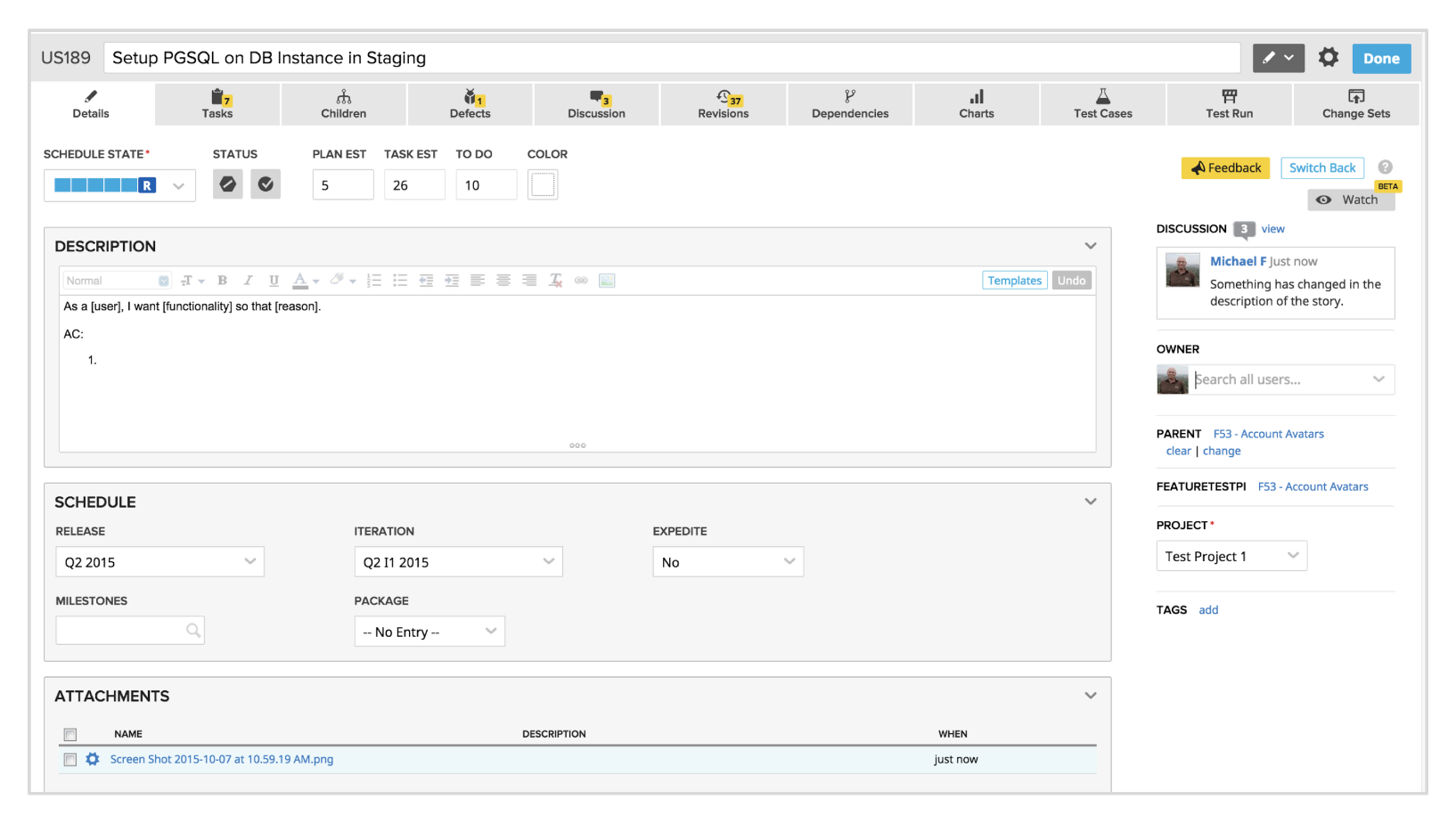
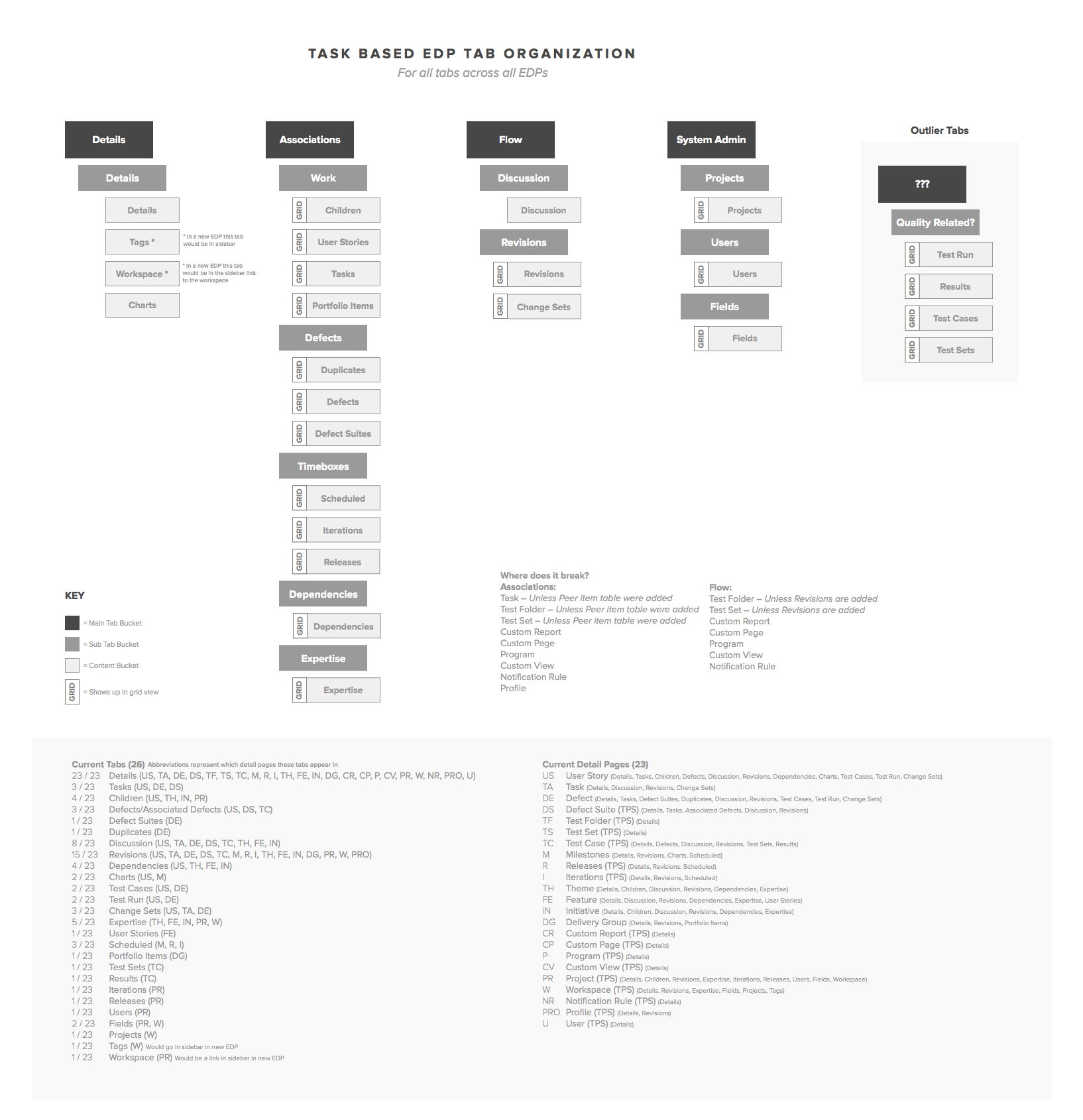
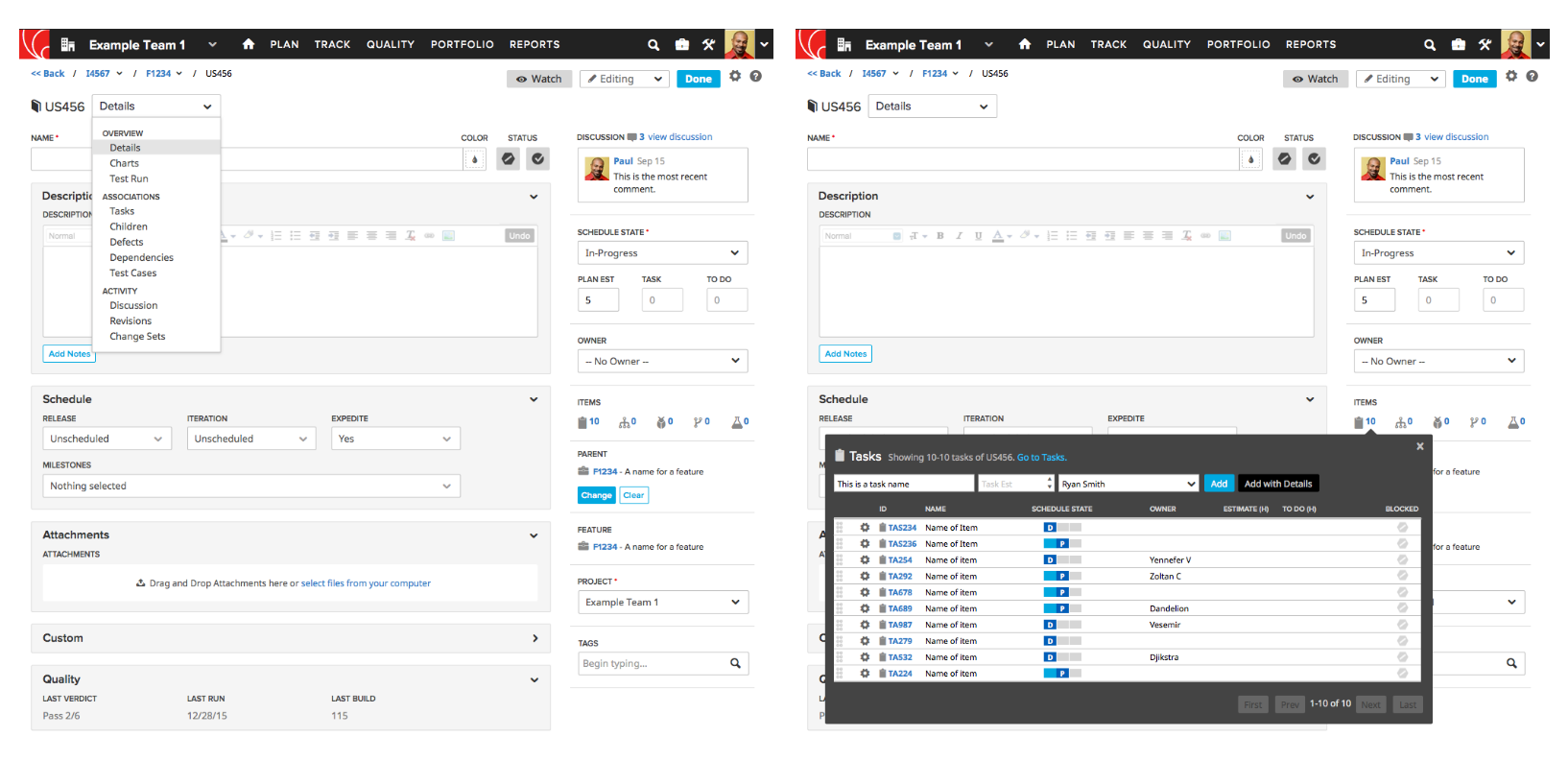
CA Agile Central (formerly Rally Software) utilizes distinct detail pages to manage 23 varying work items. A legacy beta initiative, Editable Detail Pages (EDPs), faced low user retention due to platform performance issues. This technical constraint sparked a strategic engineering initiative to entirely rebuild the infrastructure in a high-performance tech stack, presenting an excellent opportunity to optimize design consistency, tab structures, and usability. I co-led a massive platform-wide inventory and a dual-phase usability testing track to dramatically reduce tab bloat, condensing 26 disparate tabs down to a highly optimized core. We co-designed a validated, task-based organization scheme and a high-efficiency popover component framework, allowing users to seamlessly interact with associated work items alongside primary data fields.
The Challenge
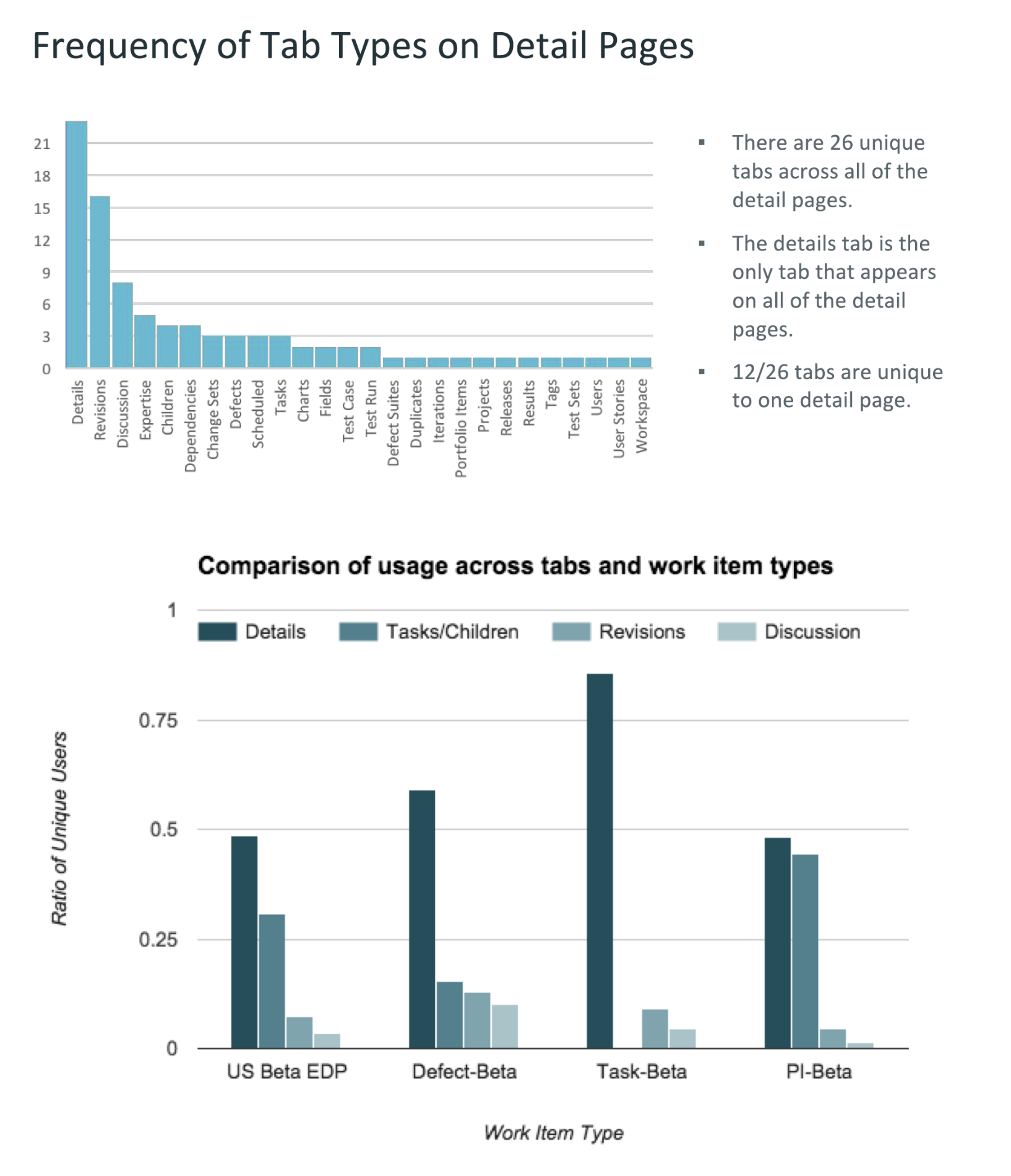
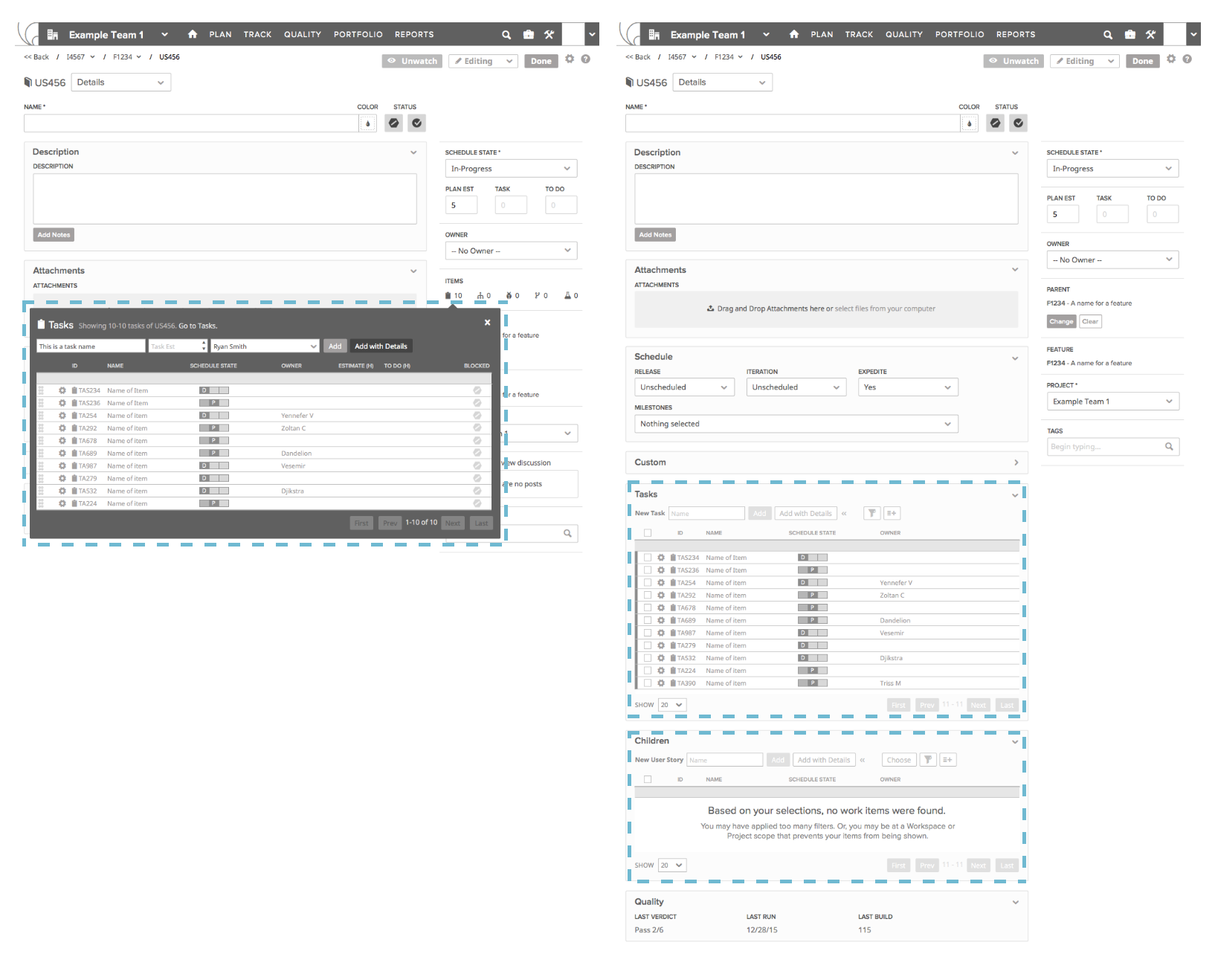
Severe interface fragmentation existed across the platform’s 23 distinct detail pages, with 12 out of 26 total tabs completely unique to only a single artifact type. This heavy visual noise inflated the cognitive load experienced by users. Furthermore, customer feedback revealed sharp, conflicting user needs: enterprise power users required deep data visibility (such as reading item descriptions concurrently with managing child tasks), but traditional flat layouts quickly became visually chaotic and triggered severe browser rendering lag. We pivoted from a flat, embedded table layout to a contextual popover pattern, solving the data-density problem by spawning transient, on-demand data frames right next to parent tasks without displacing the user.
Process & Execution
Empirical Auditing
An empirical audit mapping 23 detail pages revealed that 13 pages lacked beta EDP availability and 26 distinct tabs existed across the system. Data analysis showed high fragmentation, with only the "Details" tab appearing consistently across all pages, while 12 tabs were unique to a single page.
Dual-Phase Validation Testing
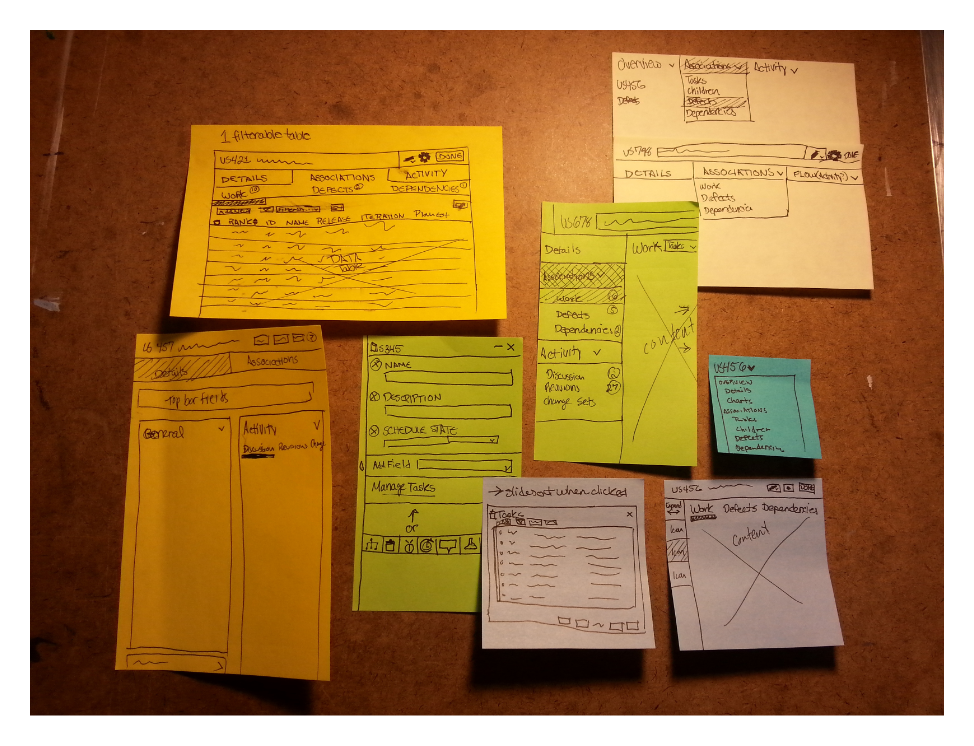
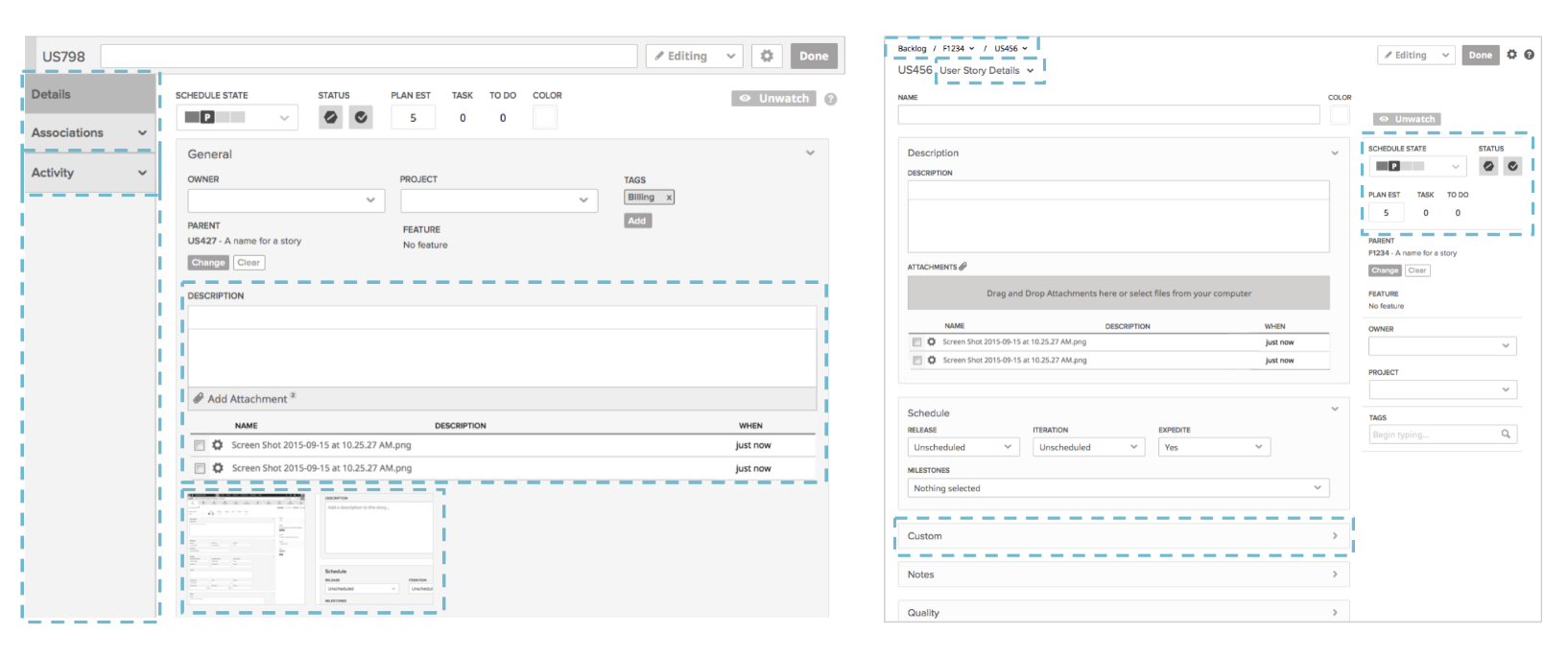
We orchestrated a multi-track testing funnel with live customer cohorts to empirically isolate the winning design patterns. Phase 1 focused purely on navigation mechanisms (Sidebar vs. Dropdown configurations), while Phase 2 isolated tab elimination layouts (Popover vs. Embedded Table mechanics).
From Insights to Requirements
We integrated our research and testing data into requirements with the help of Product Management. This coordination guaranteed that our research insights served as the architectural blueprint for the upcoming "Quick Detail Pages" rollout, directly driving the platform’s long-term engineering strategy.
Back to Work List