
Analytical Graphics Inc.
Geospatial Content Server
Role
Lead Designer on Project
Cross-Functional Partners
Frontend Engineers, Backend Engineers, & Product Management
Core Focus
Enterprise Data Ingestion, High-Density 3D Geovisualization, Systems Orchestration, & Interface Component Design
Design Ecosystem
Cirrus Platform
Project Summary
Digital mission planning and analysis rely heavily on fast, uncompromised access to high-fidelity environmental simulations, yet standard data hosting pipelines frequently struggle to process massive geographical datasets without inducing severe latency. To bridge this operational bottleneck, I designed Geospatial Content Server (GCS) from concept to completion. Built on the proprietary Cirrus platform, GCS is a web app providing a comprehensive solution for hosting and serving high-resolution terrain, imagery, and other 3D datasets (like building data and complex 3D models) optimized to deliver massive datasets directly to STK (Systems Tool Kit) for visualization and analysis in digital mission simulations.
To streamline this complex architecture, I worked closely with engineering and product management to mockup and build an end-to-end cloud pipeline. The resulting workflow allows system administrators to smoothly upload, configure, and preview live datasets directly within an interactive globe view. This transformed a heavy, technical backend process into a highly visible, reliable staging interface before assets are pushed to downstream simulation software.
Contextualizing The Complexity
Contextualizing The Complexity
The Core Challenge
Delivering massive, multi-gigabyte geospatial datasets to simulation engines like Systems Tool Kit (STK) requires absolute processing precision. A single corrupted coordinate file or poorly formatted raster matrix can break downstream mission simulations completely.
The core challenge centered on translating an inherently chaotic data processing pipeline into a reliable, self-serve interface. When dealing with specialized 3D assets, system administrators need real-time clarity at every phase. The product experience needed to successfully solve three distinct enterprise pain points:
The Black Box of Ingestion
Raw file processing requires complex calculations (e.g., configuring height references and void fillers) System administrators needed total visibility over asynchronous data processing states to avoid duplicate task queues.
Visual Isolation
Admins had no way to verify if an uploaded dataset was accurate, aligned, or uncorrupted until it was fully deployed to downstream desktop software or other external tools.
High-Stakes Error Recovery
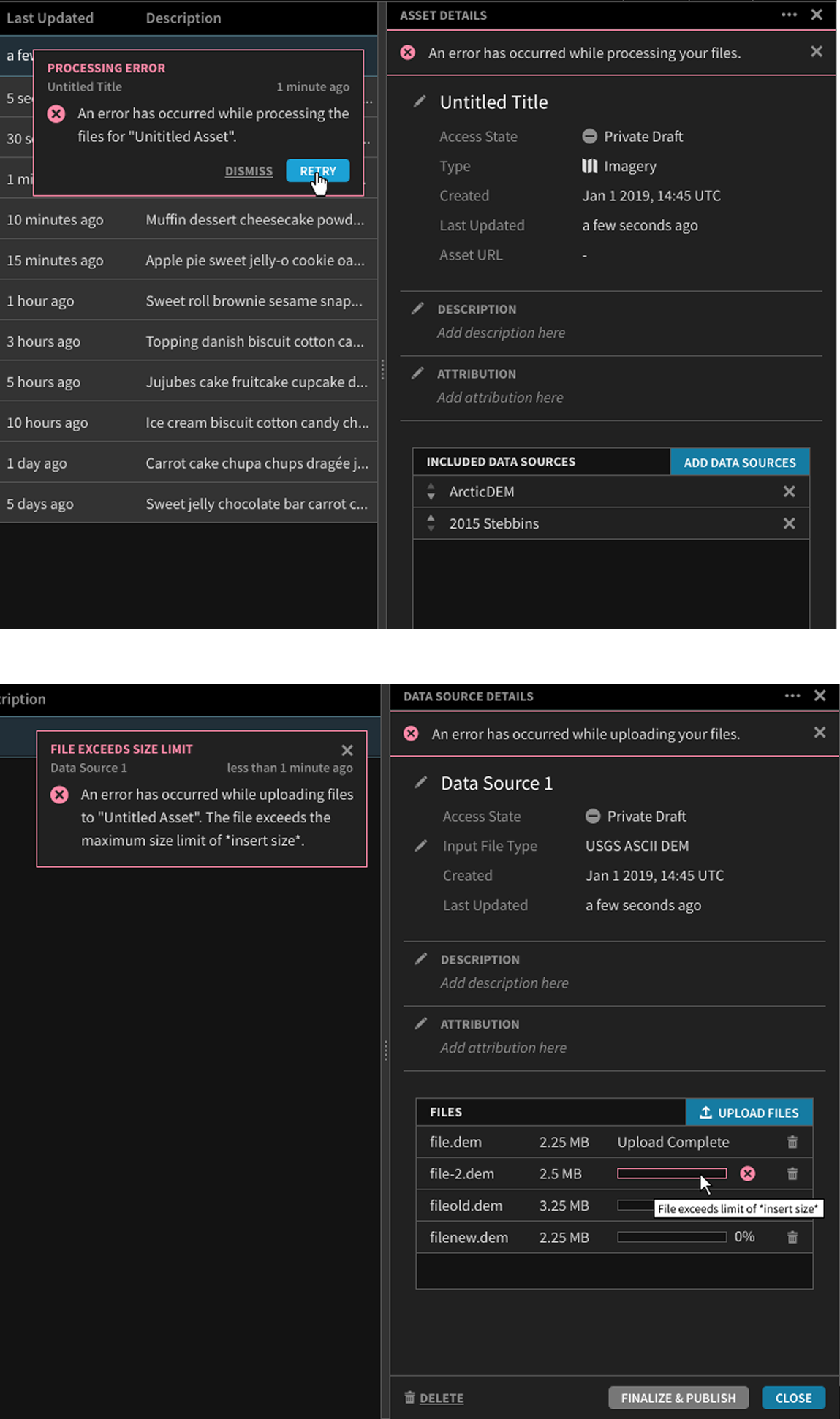
When a massive file fails during upload or compilation, standard generic errors trigger user frustration. The system needed explicit, contextual error resolution states to optimize operator rescue loops.
Deep-Dive Product Pillars
Deep-Dive Product Pillars
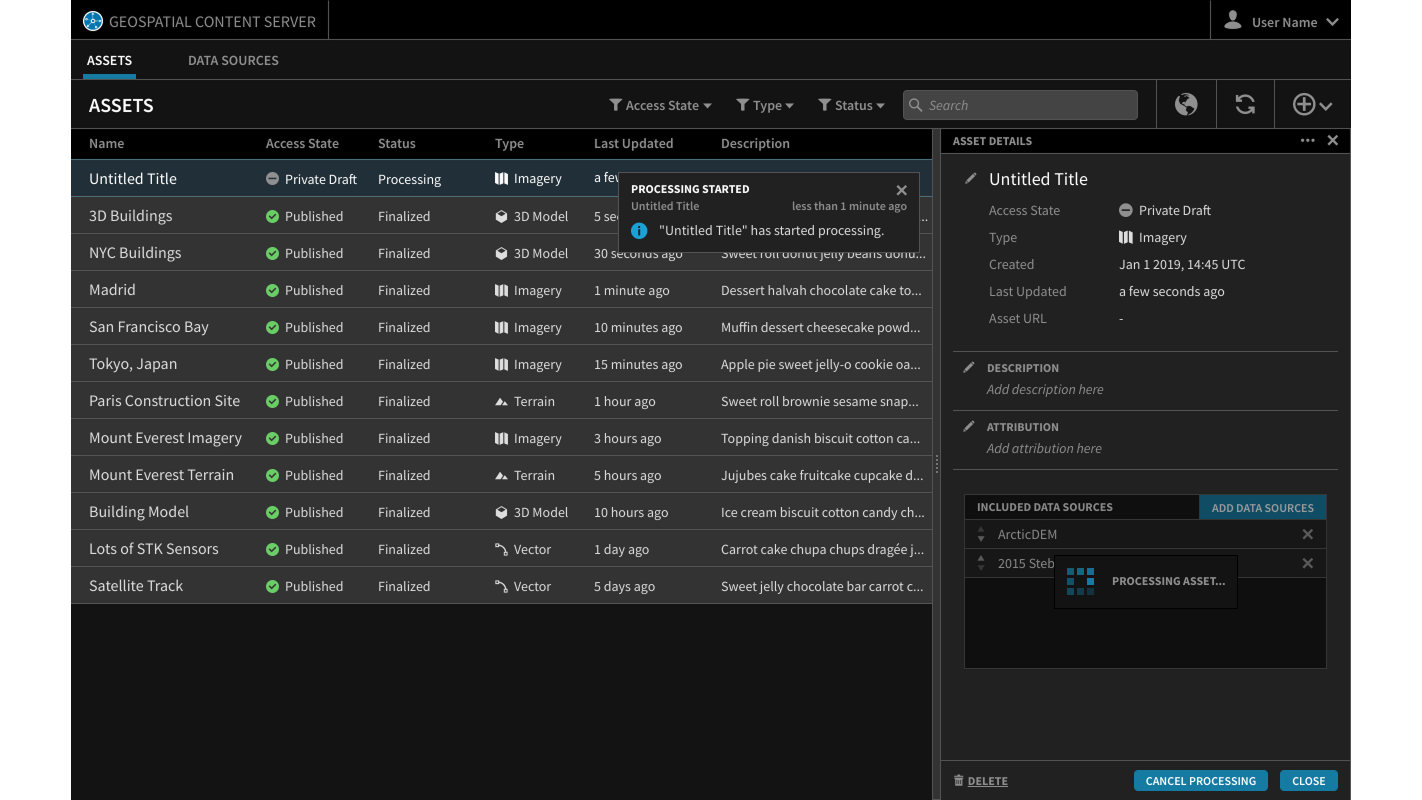
Designing an Intentional, Multiphase Ingestion Funnel
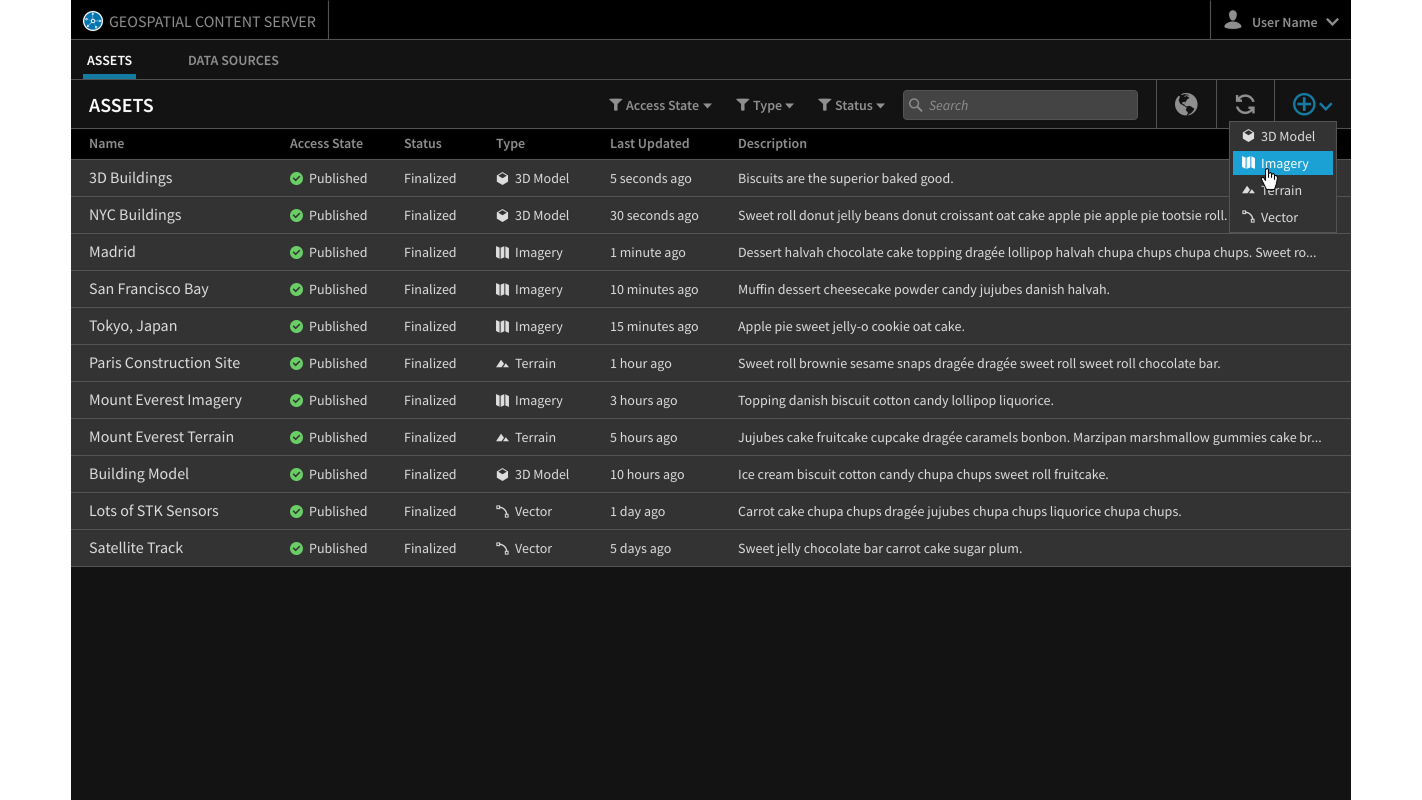
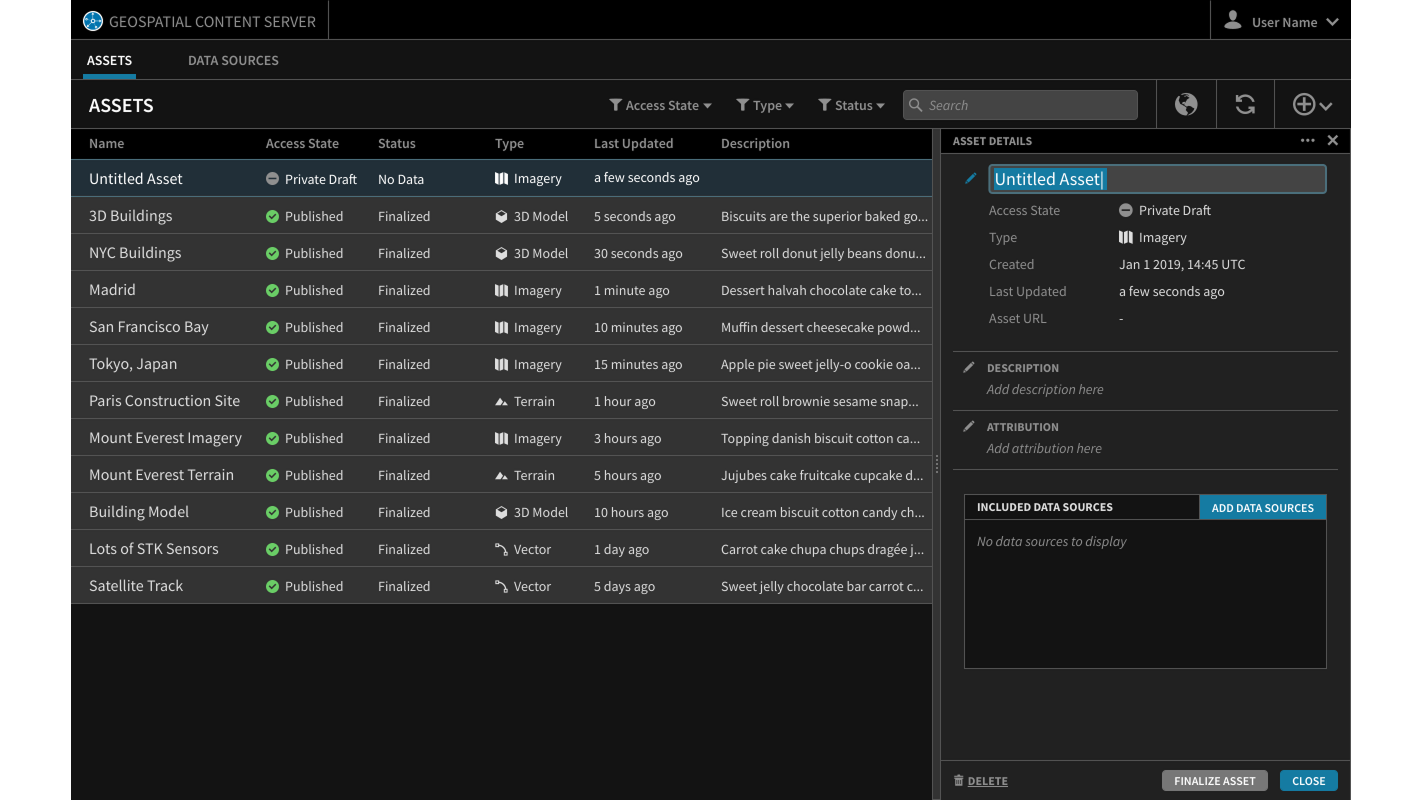
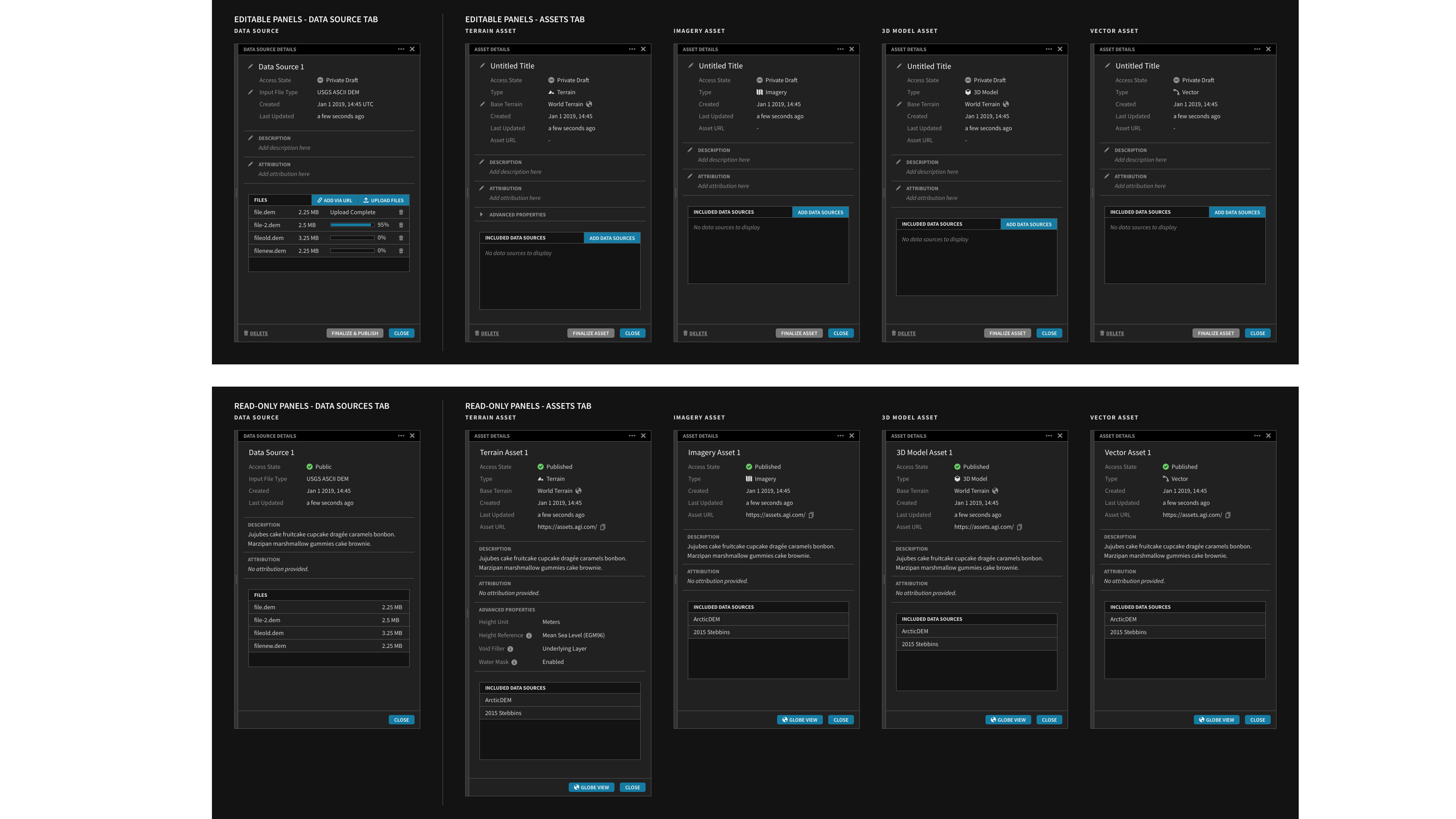
The core architecture of GCS relies on transforming raw file data into stable web-hosted map assets. I designed a highly structured, multiphase layout pattern separating Data Sources (raw file inputs) from completed Assets (compiled, deployable layers).
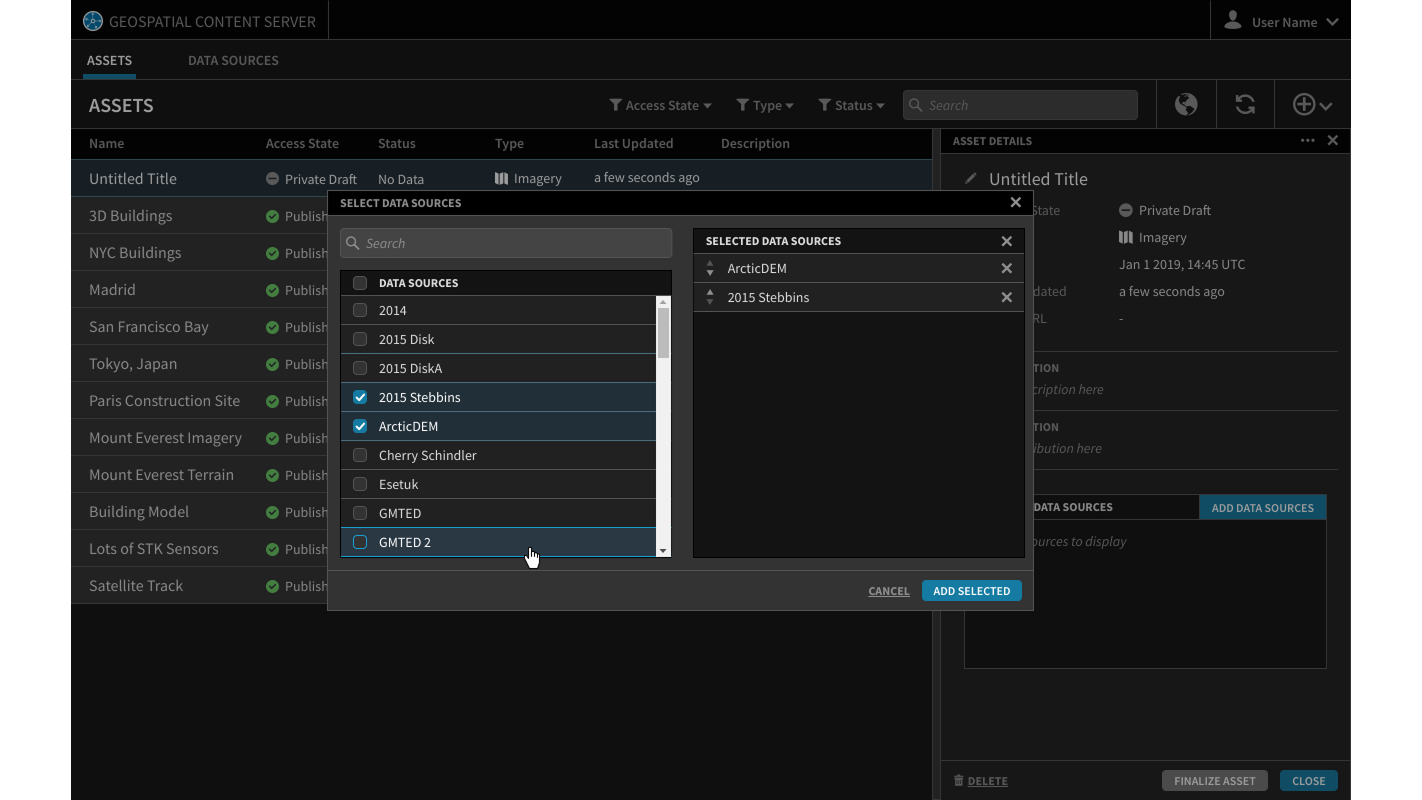
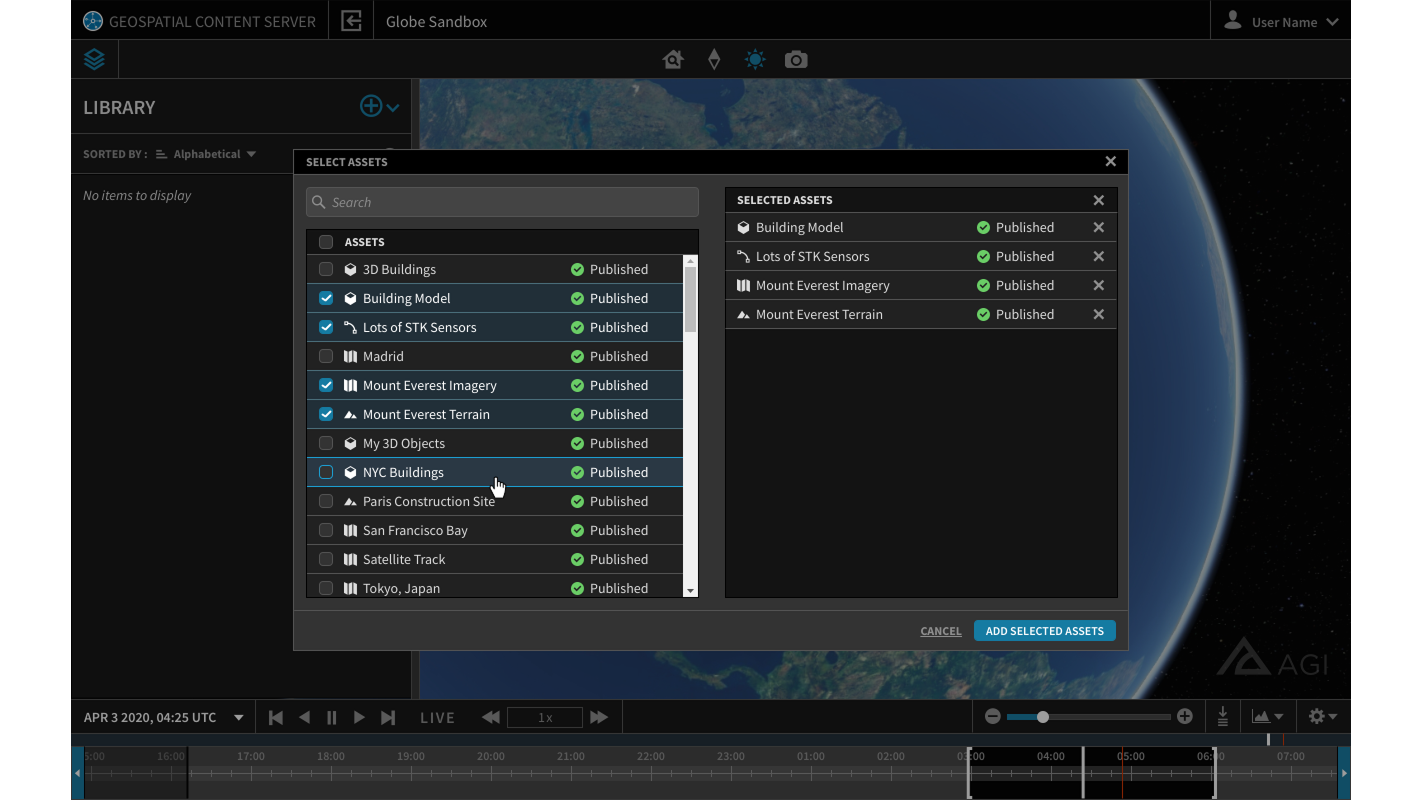
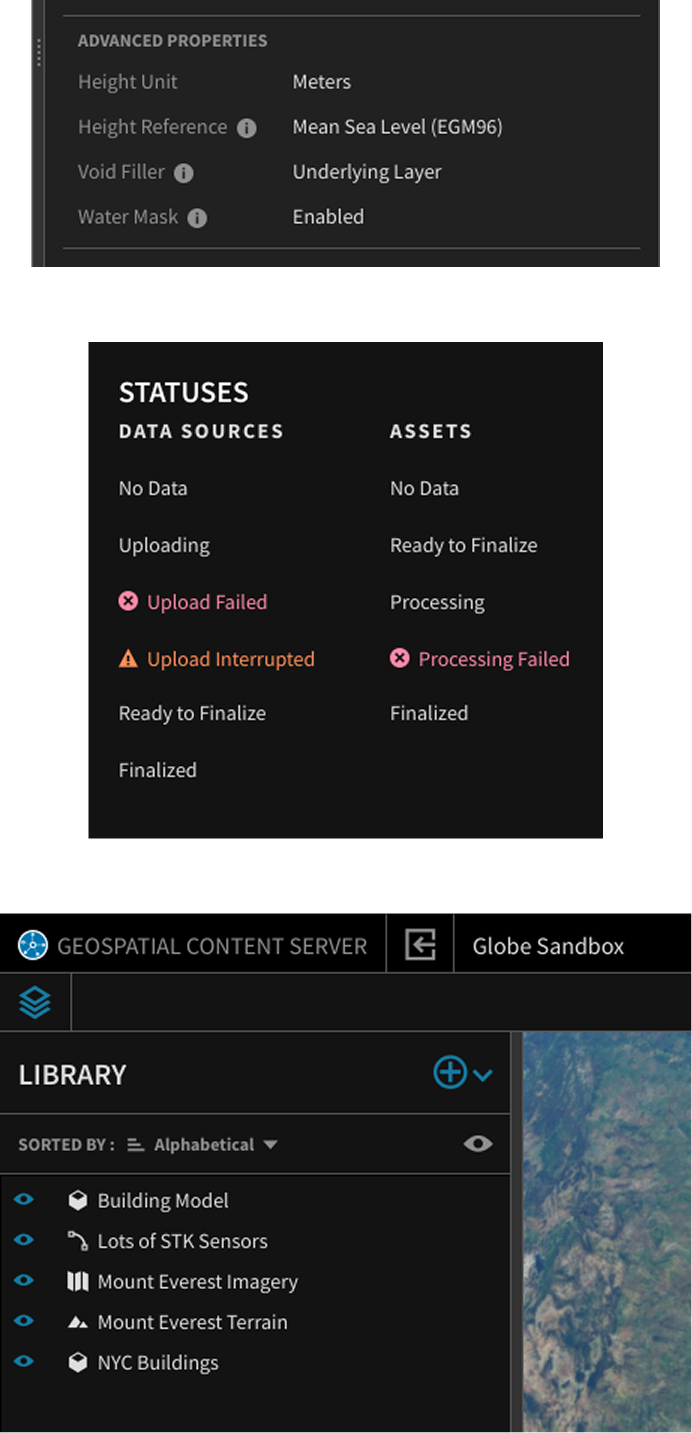
To guide admins through complex system configuration, the upload drawer isolates specific advanced spatial property attributes, such as input height references relative to the WGS84 ellipsoid and custom water masking overrides, into modular, digestible groups. By utilizing clean side-by-side modal panels, users can easily select multiple granular source datasets, review their structural order, and execute compiler steps seamlessly.
Eliminating Asynchronous Blindspots
A hallmark of senior technical UX design is managing user confidence during extended system processing times. Because generating 3D terrain and vector tracks takes time, I designed a robust, real-time status matrix that mirrors the live server status.
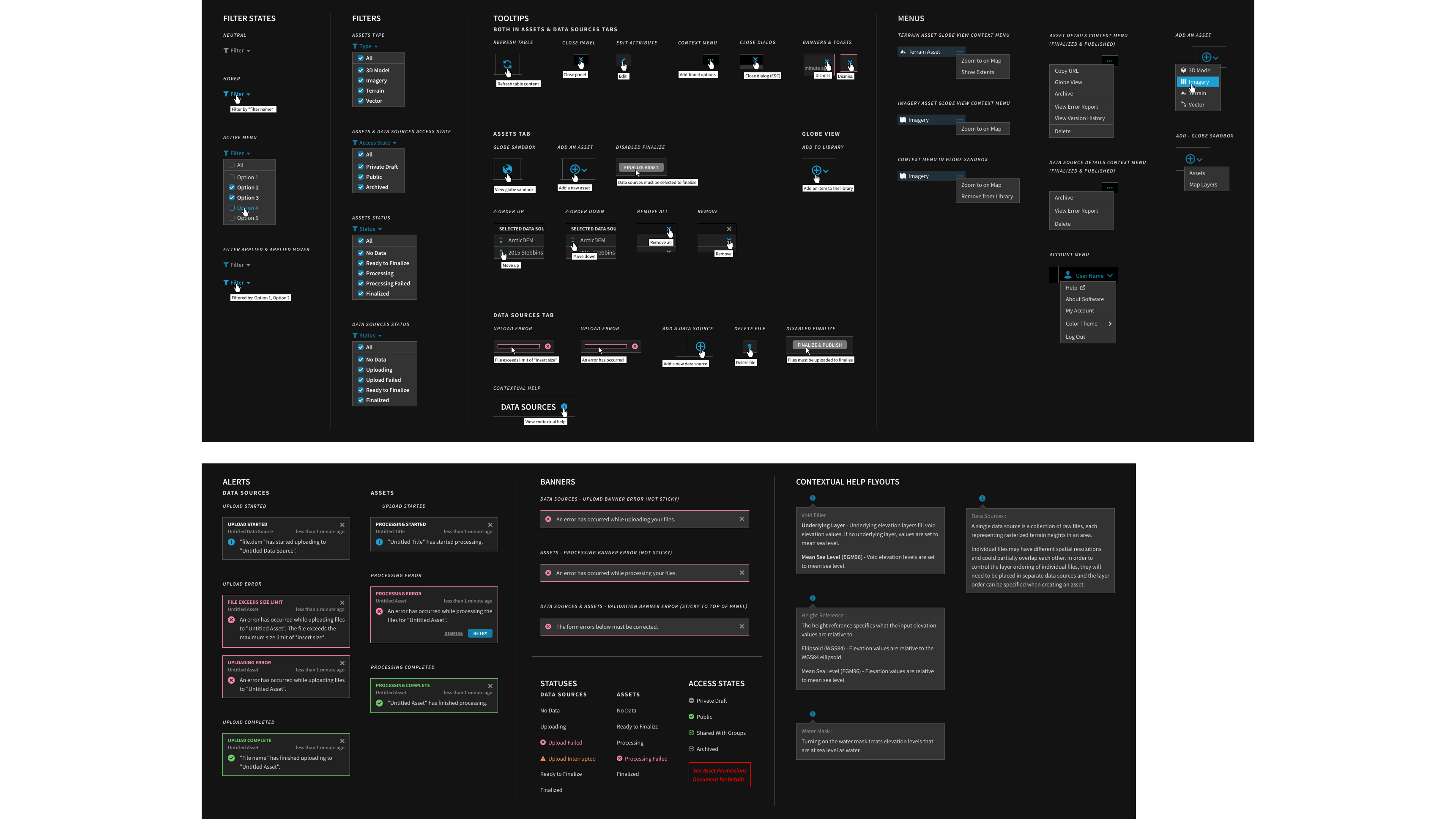
The interface features an explicit visual status taxonomy: transitioning smoothly from an editable private draft to a real-time progress layout tracking asynchronous Processing or Uploading states. By creating system-wide visual alerts, banners, and crisp toast notifications (e.g., "Processing Started", "Processing Completed"), the application successfully keeps users informed while preventing premature platform exits or redundant action clicks.
Bridging Data and Space
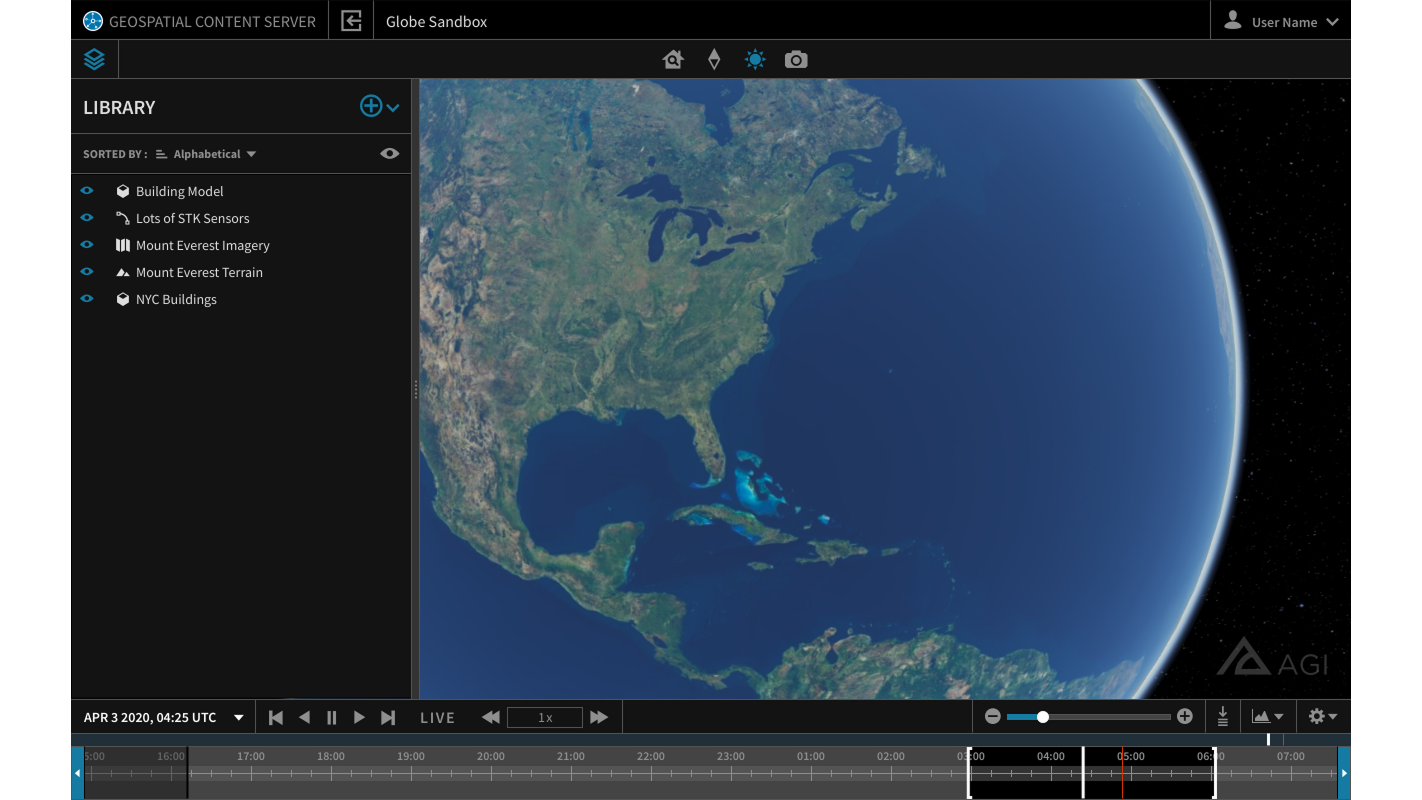
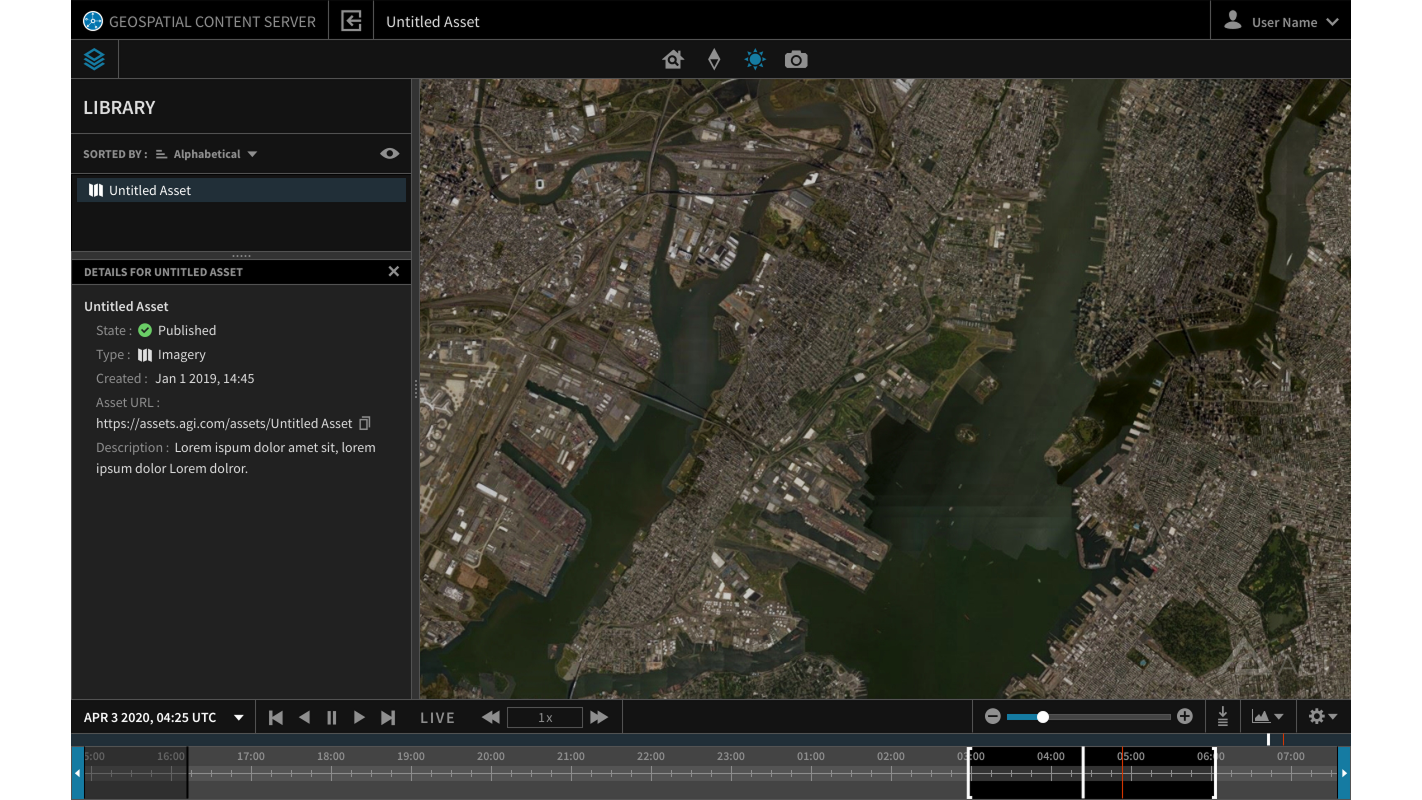
To eliminate downstream deployment risks, I designed the end-to-end user flow for the Globe Sandbox View. Rather than presenting users with a flat text confirmation screen, completing an asset generation sequence unlocks an immersive 3D digital twin visualization interface.
Admins can dynamically toggle specific map layers on and off, adjust global timeline parameters via an interactive chronological time scrubbing rail to audit exactly how environmental lighting shifts over a full day/night cycle, and manually inspect the bounding box extents of the imagery. This integration of context menus and multi-dimensional visualization transforms GCS from a basic repository tool into a simulation staging engine.
Operational Impact & Retrospective
The Outcome & Proxy Metrics
By launching Geospatial Content Server as a centralized web app on the Cirrus platform, we decoupled technical file processing from local hardware, shifting the heavy computational lifting safely to the cloud.
Minimized Downstream Friction
Providing an interactive Globe Sandbox drastically decreased asset deployment failures inside STK and other downstream tools, as admins could visually audit and catch bounding box disparities or coordinate anomalies early.
Accelerated Operation Triage Velocity
Standardizing real-time tracking, contextual toast banners, and clear processing failure metrics eliminated blind troubleshooting.
Senior Retrospective
Designing contextual error indicators like 'File Exceeds Size Limit' reinforced that true system resilience means actively safeguarding user time and input effort. Engineering an actionable “Retry” path allowed system administrators to troubleshoot and swap out a broken or oversized file inline, entirely eliminating the need to discard a complex multi-file configuration draft and start the workflow from scratch.
Integrating a timeline scrubbing rail for day and night cycle simulation proved that admins need more than flat data proofs for verification. Allowing them to evaluate spatial illumination changes directly inside the staging environment ensured absolute visual certainty before assets were ever committed to external simulation applications.
Back to Work List