
Foraker Labs
Usability First

Role
Co-lead Designer on Project
Cross-Functional Partners
Co-Lead Designer, &, Executive Leadership Stakeholders
Core Focus
Information Architecture (IA), Large-Scale Content Inventories, Card Sorting Testing, & Responsive Mobile Navigation
Overview & Challenge
Project Summary
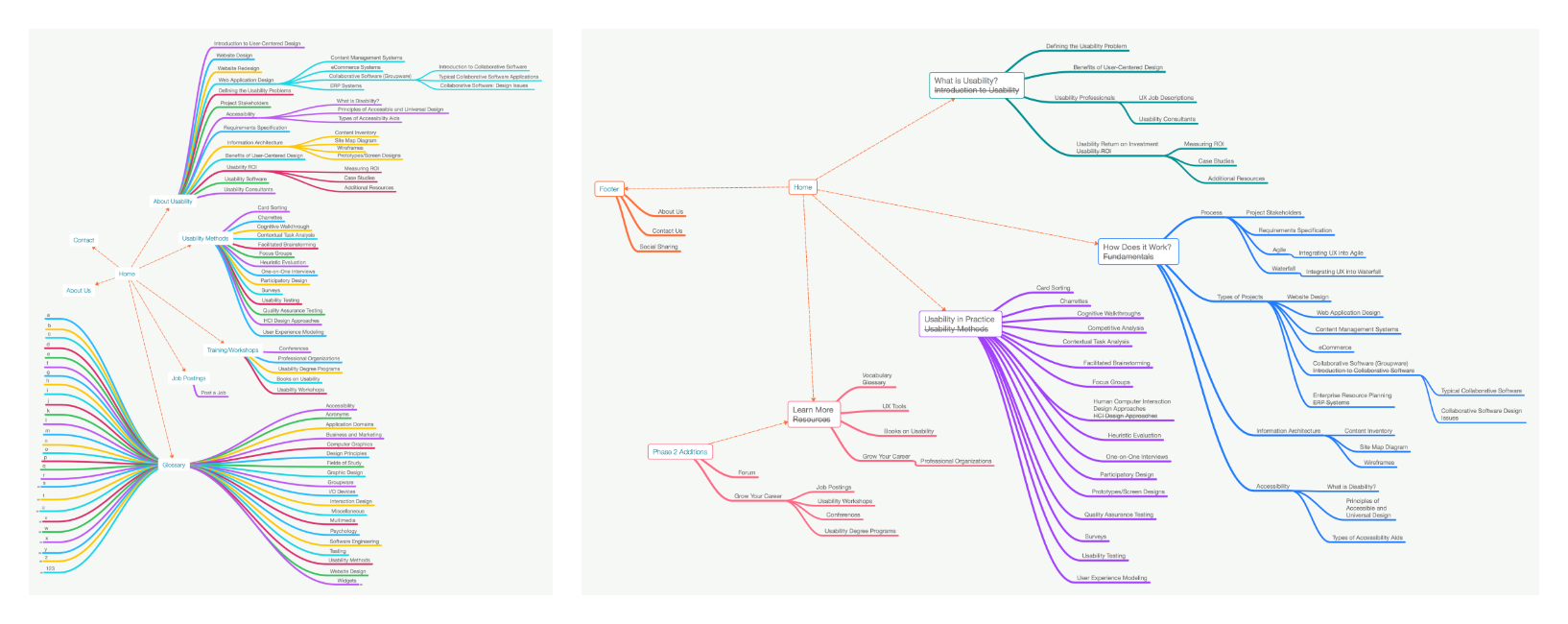
Usability First is a massive educational resource engineered for individuals new to the fields of human-computer interaction and user experience, featuring a sprawling digital footprint of roughly 70 core content pages and a major market differentiator in its extensive glossary of nearly 2,000 terms. Having gone untouched for five years, the platform suffered from severely outdated resource information, stale navigation topology, and poor responsive handling across modern mobile devices. I co-led a complete overhaul of the platform's information architecture (IA) and content volume, leveraging data analytics, extensive content inventories, and user research to define a scalable, future-ready layout structure.
The Challenge
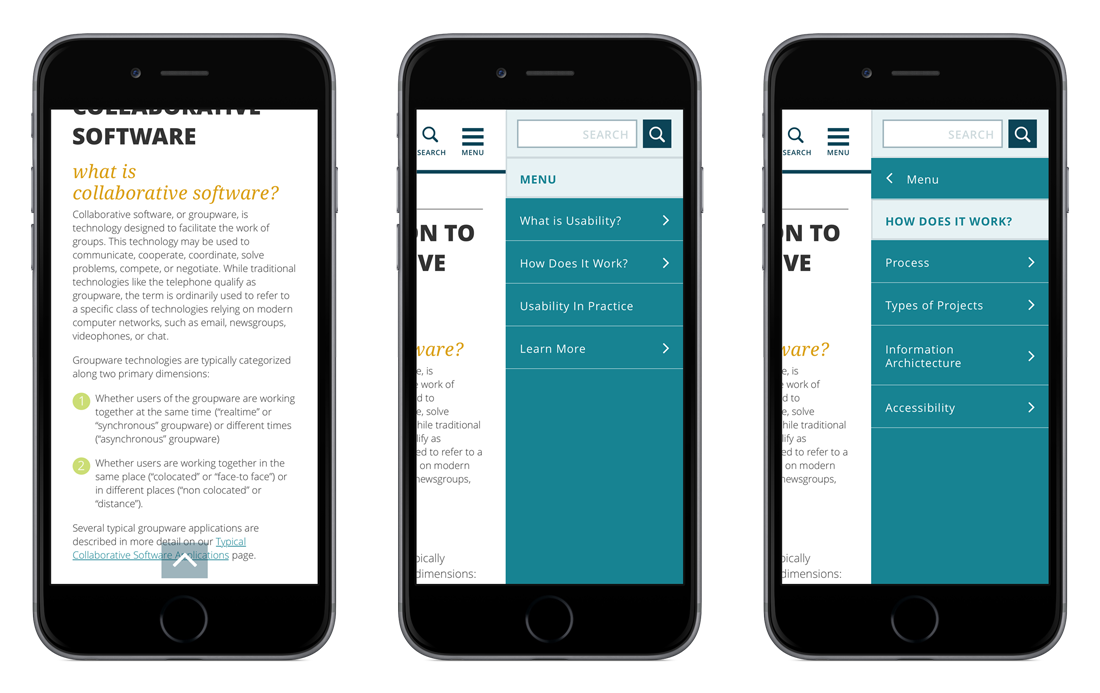
Housing 70 dense resource environments alongside a 2,000-term dictionary glossary renders an information architecture highly volatile. A flat menu tree would instantly trigger choice paralysis for novice users, while an overly rigid architecture would obscure valuable deep-linked reference topics. Furthermore, the layout logic had to adapt between vastly different form factors, guiding desktop users through massive content horizons while completely restructuring contextual sidebars to live beneath main reading blocks on mobile screens without disrupting cognitive flow.
Process & Execution
Data-Backed Discovery
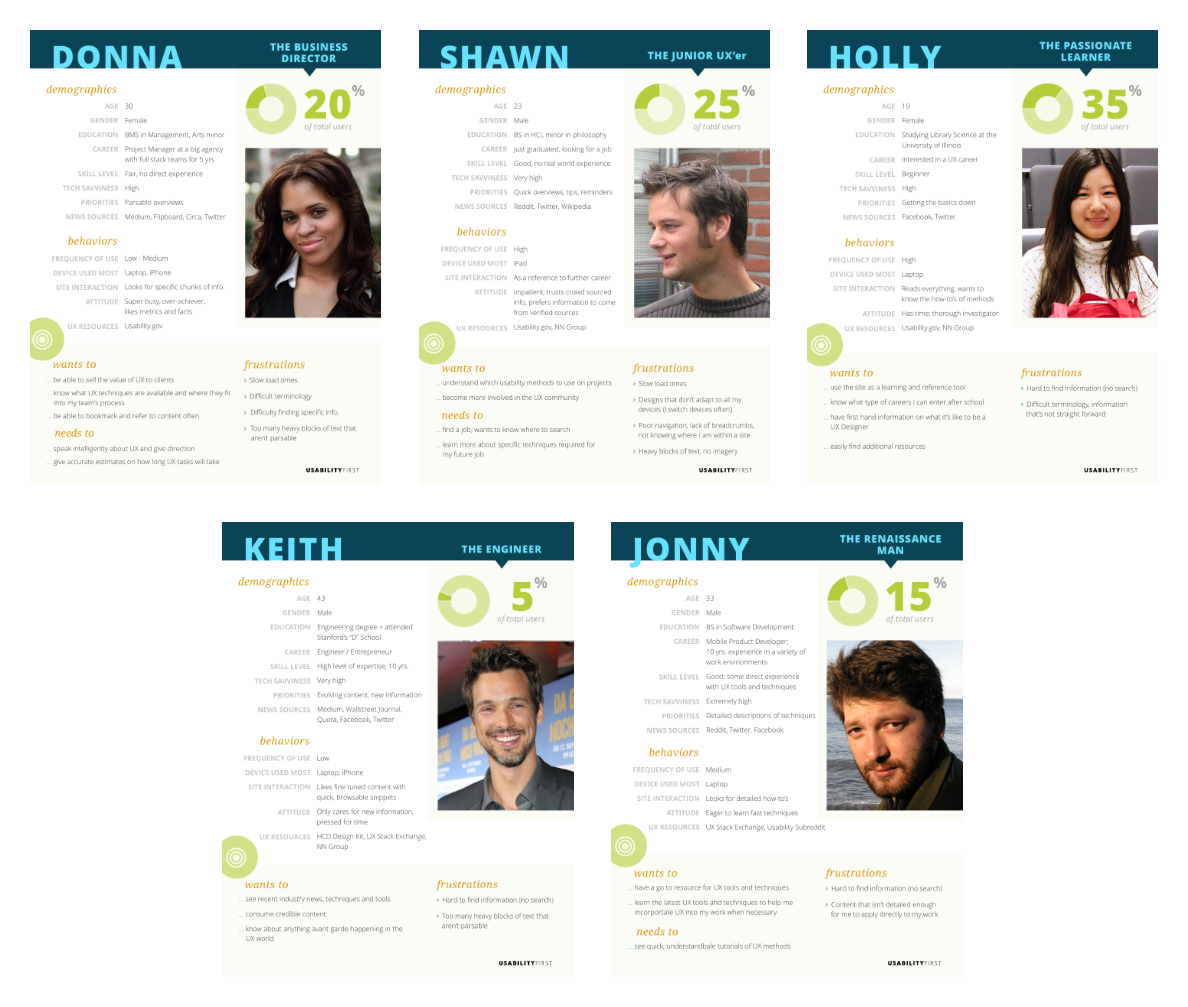
To establish a foundation for the architectural restructuring, our team pulled Google Analytics logs to isolate historical user demographics, core traffic flows, and high-frequency search queries. We used this data to target user personas whom we recruited and conducted user interviews with to gain insight on what users wanted to gain from a usability resource site.
Card Sorting Validation
We recruited target-demographic that matched our known user personas to run structured card sorting tracks concurrently with our initial design sketching phases. This empirical feedback loop allowed us to completely untangle and reorganize the platform's nested taxonomy tree based on how users naturally search for terminology.
Mobile & Desktop Navigation
We engineered a bifurcated responsive navigation strategy. For desktop layouts, we implemented a mega-menu pattern to lay out the platform's vastness transparently. For mobile viewports, we abandoned the flat structure, compressing choices into a, step-by-step hierarchical drill-down navigation to shield users from information overload while protecting limited screen real estate.
Back to Work List